
Blog
“For people with swallowing disorders, every sip and every bite can feel like a test.”
Swallowing seems so natural most people never think about it. But for thousands of Australians with dysphagia (swallowing disorders), it’s a daily challenge. Traditional therapy with speech pathologists remains central, yet a newer option is showing promise: Respiratory Muscle Training (RMT).
It might seem unusual. what does breathing have to do with swallowing? As research shows, quite a lot.
Understanding Swallowing Disorders
Swallowing is more than a reflex. It requires over 30 muscles and nerves to work in precise coordination, moving food and liquid safely into the stomach.
When this process breaks down due to ageing, stroke, neurological disease, trauma, or other conditions, dysphagia occurs.
One of the most serious risks is aspiration pneumonia, where food or drink enters the lungs. Hospitalisations from aspiration pneumonia are increasing, particularly in older Australians, with a heavy impact on families and the healthcare system.
Respiratory Muscle Strength Training (RMST): More Than Breathing Exercises
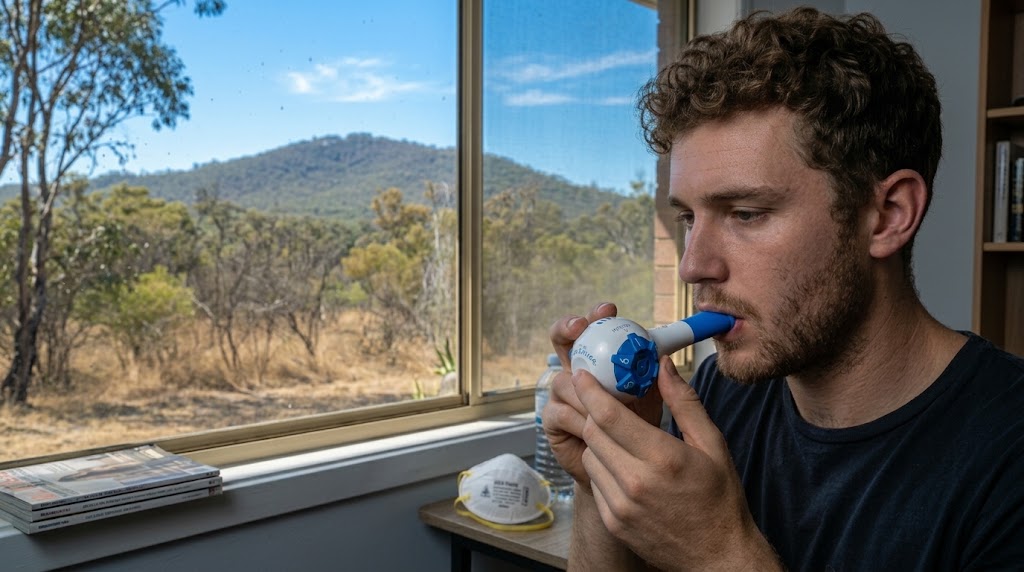
RMT/RMST is not “just deep breathing.” It uses handheld devices that provide resistance to strengthen the diaphragm, intercostals, and airway muscles. These same muscles are critical during swallowing.
Think of it like weight training for your breathing system:
- You start with a manageable resistance.
- Over time, as strength improves, the resistance increases.
- The goal is stronger breathing and swallowing coordination.
Why Breathing Muscles Matter When You Swallow
When you swallow, your body briefly halts breathing so food passes the windpipe safely. Weak respiratory muscles can disrupt this timing, increasing the risk of aspiration. A weak cough reflex also makes it harder to clear the airway.
The Research
- Reviews suggest that expiratory muscle strength training (EMST) may improve swallowing safety and reduce aspiration risk (Schindler et al., 2025).
- A trial in Huntington’s disease patients showed improved respiratory strength after four months of RMT, though swallowing gains were modest (Pizzorni et al., 2021).
- An Australian case series found RMT helped critically ill patients regain cough and swallow function (Ward et al., 2019).
While results are encouraging, experts caution that evidence is still emerging and more large-scale trials are underway (ANZCTR, 2025).
Takeaway: RMT doesn’t replace traditional therapy, it complements it.
Real-World Benefits
People who integrate RMT into therapy often report:
- Safer, more confident swallowing
- Fewer coughing or choking episodes
- More enjoyable meal times
- Stronger cough reflex to protect the airway
- Less anxiety around eating and drinking
These improvements also reduce risks of malnutrition and dehydration two common complications of untreated dysphagia.
Who Can Benefit?
Swallowing disorders affect more than just the elderly:
- Children with developmental conditions
- Adults recovering from surgery (especially head, neck, or brain surgery)
- People with neurological conditions (stroke, Parkinson’s, Huntington’s disease)
RMT has also been incorporated into some NDIS support plans, where swallowing and respiratory therapy are considered reasonable and necessary (NDIS, 2022).
When choosing a therapist, look for:
Finding a Qualified RMST Provider
- Credentials in speech pathology, physiotherapy, or respiratory therapy
- Use of evidence-based protocols tailored to your condition
- Clear progress tracking (swallow safety, cough strength, diet upgrades)
- Collaboration with GPs or specialists
Tip: Providers listed in reputable health directories or allied health networks are a safer bet.
What a Typical RMT Program Looks Like
- Assessment: swallowing and breathing strength evaluated.
- Training sessions: resistance-based breathing exercises several times per week.
- Gradual progression: resistance increased as strength improves.
- Regular reviews: swallow safety and airway protection re-checked.
Progress usually builds over weeks to months, not overnight.
Key Takeaways
- Dysphagia is common and serious, especially in older adults.
- RMT strengthens both breathing and swallowing muscles.
- Evidence suggests RMT/RMST improves airway protection, cough strength, and swallow safety.
- It’s not a cure, but a complementary therapy alongside speech pathology.
- Qualified providers tailor programs for each individual.
Closing Thoughts
Dysphagia may be invisible, but it touches every meal, every conversation, and every breath. Respiratory Muscle Training offers a research-supported approach to strengthening the muscles that matter most, those involved in swallowing, breathing, and living with confidence.
Ready to explore RMT? Visit The Breather Store to learn more and access devices trusted by health professionals across Australia.
FAQs
Q.1: Can RMT cure swallowing disorders?
No. RMT is best seen as a supportive therapy that strengthens muscles involved in swallowing and breathing.
Q.2: Can RMT cure swallowing disorders?
Some people notice improvements within weeks, but most gains occur over several months.
Q.3: Is it safe for children or elderly adults?
Yes—when supervised by a qualified health professional who adjusts resistance and intensity.
Q.4: Do I need special equipment?
Yes. RMT devices such as The Breather provide adjustable resistance for safe, progressive training.
References
- Schindler, A. et al. (2025). Expiratory muscle strength training for dysphagia: A systematic review. European Archives of Oto-Rhino-Laryngology.
- Pizzorni, N. et al. (2021). Respiratory muscle training on pulmonary and swallowing function in Huntington’s disease: A pilot trial. UWA Research Repository.
- Ward, E. et al. (2019). Respiratory muscle strength training in critical care patients with severe deconditioning: A case series. NAHC.
- Australian New Zealand Clinical Trials Registry (2025). Expiratory muscle strength training in dysphagia. ANZCTR.
Related Posts