Blog
Breathing Strong – How RMST Supports Stroke and Parkinson’s Recovery.
When we think of stroke or Parkinson’s disease, we often picture shaky hands, stiff limbs, or difficulty walking. But there’s something else these conditions quietly rob: your breath.
After a stroke, or with Parkinson’s, the muscles that control your breathing – the diaphragm and chest wall – can weaken. That’s a big deal. A feeble cough or shallow breath doesn’t just make everyday life harder; it opens the door to pneumonia, fatigue, speech issues, and serious swallowing difficulties.
This is where Respiratory Muscle Training (RMST) steps in. It’s a simple, drug-free way to strengthen your breathing muscles. And the results? Real. Measurable. Life-changing.

What is Respiratory Muscle Training?
Think of RMST as strength training for your lungs. Just like lifting weights builds arm muscles, breathing against resistance builds the muscles you inhale and exhale with.
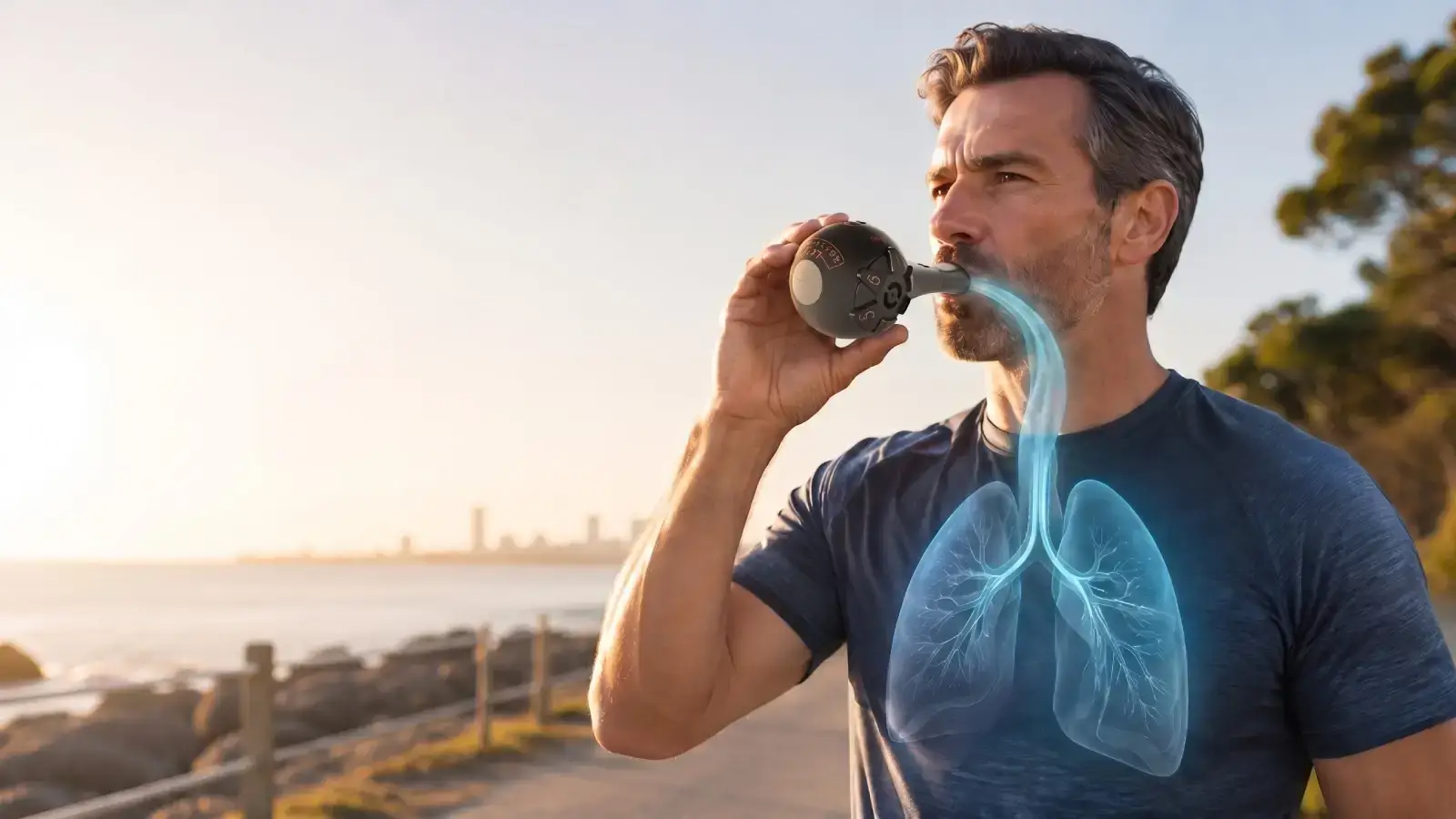
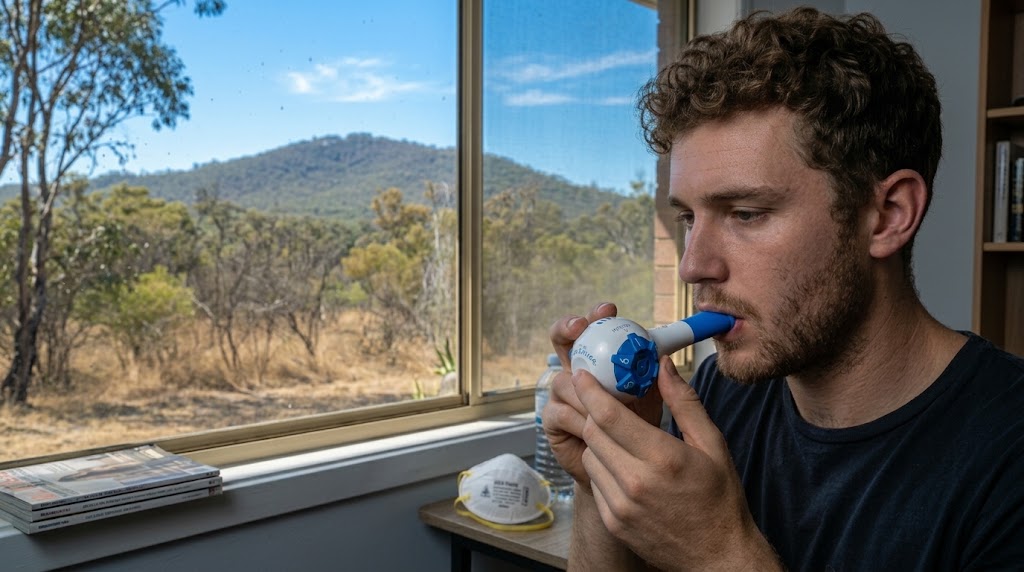
Devices like The Breather let you adjust resistance as you breathe in and out through valves – training both halves of the breath cycle. It might sound technical, but in practice, it’s simple: sit up, breathe in hard, breathe out steadily – repeat. Three sets of ten breaths, twice a day. Just five to ten minutes, at home. That’s it.
Over time, these small sessions build lung strength, improve endurance, and boost oxygen flow. It’s low-cost, non-invasive, and fully under your control.
Why RMST Matters After Stroke
A stroke can leave survivors not just struggling to move – but struggling to breathe. Many don’t realise the diaphragm is affected, which weakens their ability to take full breaths or cough effectively.
A weak cough can’t clear the airways, making infections like pneumonia more likely. Breathing effort also increases fatigue, making simple activities like walking or speaking exhausting.
RMST offers a practical solution. Research shows stroke patients who practise RMST see:
Increased inspiratory and expiratory muscle strength
- Better lung volumes and oxygen uptake
- Improved walking distance and stamina
- Fewer respiratory complications
- Safer swallowing and stronger cough reflexes
In one study, stroke survivors who trained with both inspiratory and expiratory resistance made greater gains than those who trained in only one direction. And it wasn’t just better test results; they reported more energy, clearer airways, and more confidence in daily life.
Even swallowing, often disrupted by stroke, can improve. A pilot study found that just four weeks of combined RMST significantly boosted swallow safety and cough strength in chronic stroke patients.
For stroke rehab, RMST fills a critical gap: it helps people recover the breath to live, not just the ability to move.
RMST for Parkinson’s Disease

Parkinson’s disease doesn’t just slow movement; it restricts the chest and weakens breathing. Many people with Parkinson’s develop rapid, shallow breaths, soft speech, and weak coughs. Over time, more than 80% develop swallowing issues, raising the risk of aspiration pneumonia, which is a leading cause of death in Parkinson’s.
RMST helps by restoring strength where it's needed most.
Studies show people with Parkinson’s who use RMST experience:
- Stronger breathing muscles
- Louder speech and better voice control
- Improved swallowing safety
- Higher peak cough flow (to clear the airway)
- Better coordination between heart rate and breathing
One trial of 75 people doing high-intensity RMST for 12 weeks showed major improvements in breathing pressures and heart-lung coordination, with gains that lasted well beyond the training period.
In practical terms, that means a louder voice, deeper breaths, less choking at meals, and more stamina to get through the day.
Clinicians in Australia often recommend RMST as part of a multidisciplinary therapy plan, guided by speech pathologists or physiotherapists. Patients might blow into a resistance device daily or do targeted breath-and-cough drills. The key is consistency.
Breathing Exercises That Fit Into Real Life
RMST isn’t just for hospitals or clinics. It fits into the kitchen, the lounge, or even your bedside table routine. A few minutes a day is all it takes.
Devices like The Breather are easy to use and adjustable. But even without one, balloon blowing, resisted straw breathing, or snorkel breathing can be used with guidance.
Importantly, RMST is:
- Non-pharmaceutical: no drugs, no side effects
- Self-paced: start light, increase as you get stronger
- Evidence-based: backed by trials, not fads
As recommended above, most therapists recommend beginning with three sets of ten breaths twice daily. Over time, resistance increases, just like you’d add more weight at the gym.
Form matters: sit upright, breathe from the diaphragm, and stop if you feel dizzy. It should feel like a workout, not a struggle.
The Takeaway: Recovery Starts From the Inside Out
After a stroke or Parkinson’s diagnosis, it’s easy to focus only on walking or speech. But don’t forget breathing – it powers everything else.
Respiratory Muscle Training offers a powerful, practical way to support recovery. It strengthens the muscles that give you voice, protect your lungs, and keep you moving. The evidence is clear: RMST improves lung strength, stamina, swallowing, and quality of life.
If you’re a patient or caregiver, ask your therapist or GP about adding breathing training to your rehab plan. If you’re a clinician, consider this a vital tool in your neurological recovery kit.
Because every strong breath is more than oxygen; it’s independence, confidence, and one more step toward a better life.
Related Posts